L’épigraphie au XXIe siècle. Le « Cercle du détroit de Gibraltar » : un paradigme en révision
Mélanges de la Casa de Velázquez 55-2
DétailsPériode romaine (40 ap. J.-C. - fin du IIIe s. ap. J.-C.)
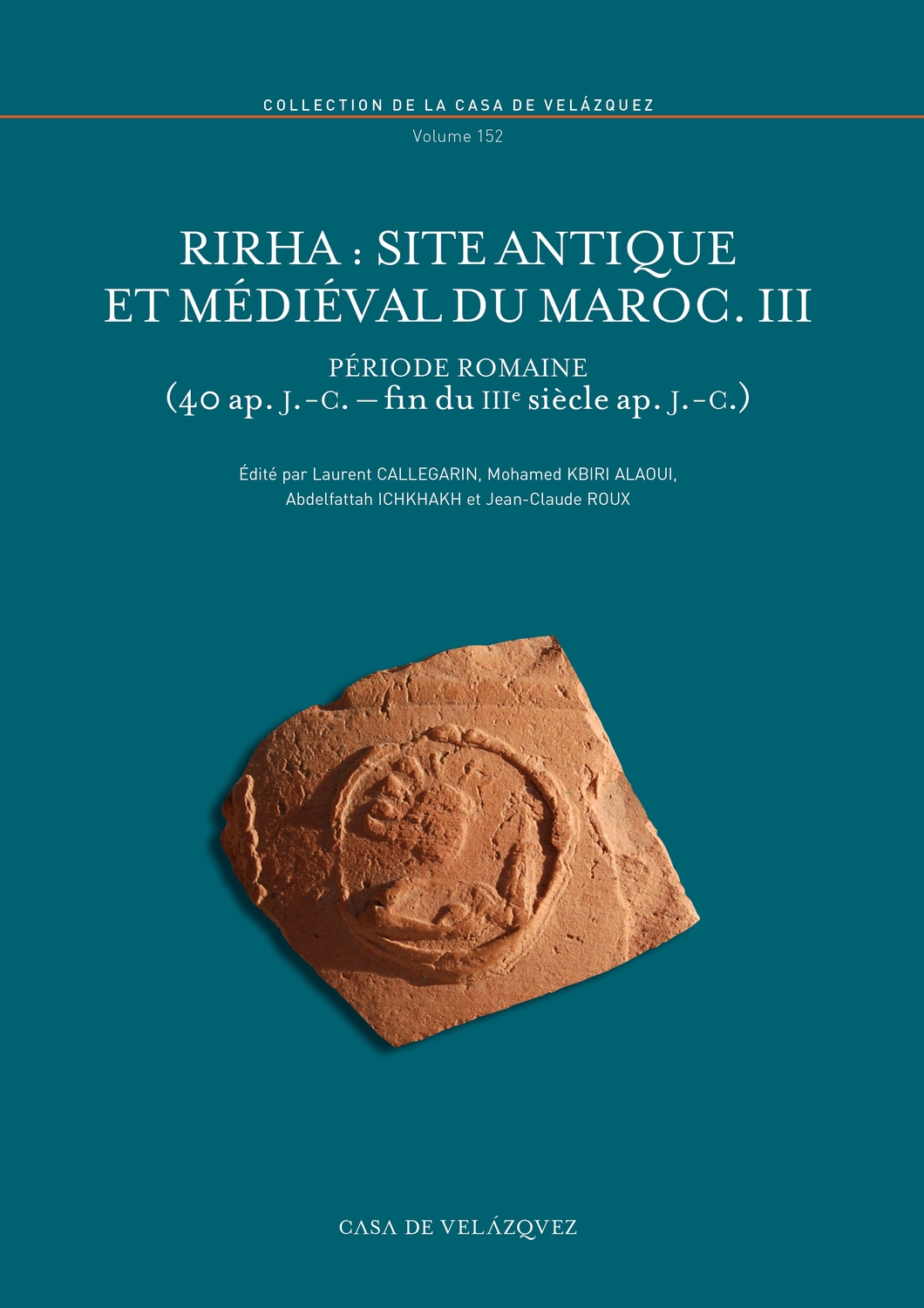
ARCHITECTURE ET STRATIGRAPHIE
I. — Les données anciennes
II. — Une reconnaissance des vestiges enfouis par la prospection géophysique
III. — Les aménagements dans l’Ensemble 1
IV. — Les bâtiments de l’Ensemble 5
V. — Une architecture mixte
LE FACIÈS CULTUREL À L’ÉPOQUE ROMAINE
I. — Les éléments du décor de l’Ensemble 1
II. — L’épigraphie latine à Rirha et dans ses environs
III. — Les monnaies
IV. — Études préliminaires des céramiques antiques
L’AGGLOMÉRATION DE RIRHA DURANT L’ÉPOQUE IMPÉRIALE ROMAINE
I. — Rirha, une ville romaine au coeur d’une zone exploitée
II. — L’agglomération de Rirha en phase avec les autres centres urbains tingitans
III. — De l’abandon de l’agglomération par le pouvoir romain
CONCLUSION. — RIRHA : UNE AGGLOMÉRATION ROMAINE(40 ap. J.-C. – IIIe s. ap. J.-C.)
Journal of Roman archaeology
Vol. 30, Nº. 2, 2017
Scholars wishing to understand the Mauretanian, or pre-Roman, period in Morocco have a hard time of it: an extraordinary stability of occupation means that sites are regularly covered by Roman and often by Mediaeval settlement, making them very hard to access in any organic manner. The site of Rirha, roughly midway between Volubilis (distance c.35 km) and Thamusida or Banasa, inside a meander of the Oued Beht, is no exception. A classic éperon barrée, the site was settled from the 5th c. B.C. through the late-antique period, and then again between the 9th and 14th c. Over 8 years L. Callegarin and his team carried out an exemplary excavation, reported in this equally exemplary publication.
Elizabeth Fentress
AION
Nº 23-24, 2016-2017
Le indagini archeologiche nella città sono state effettuate e documentate in maniera ineccepibile e lo studio condotto in modo esemplare. I testi sono chiari e di facile lettura; le illustrazioni, molte delle quali a colori, sono per lo più di ottima qualità.
Cinzia Vismara
Broché
59,00 €Disponible
Partager l'ouvrage
Mélanges de la Casa de Velázquez 55-2
Détails
Circulations, mobilités et réseaux d’échanges
Détails